
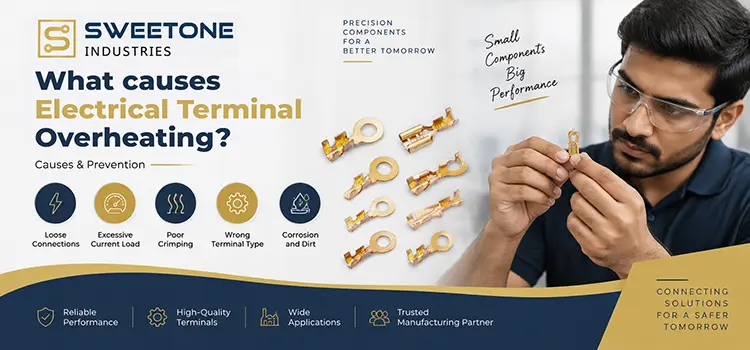
What Causes Electrical Terminal Overheating? Causes & Prevention
Under normal use, an electrical terminal should never get hot. When it does, there’s usually a problem with the connection, the load, the wire size, or the terminal itself. Sometimes the problem starts with something as simple as a loose screw. Other times it could be corrosion, bad crimping, damaged wire strands, or an overloaded […]
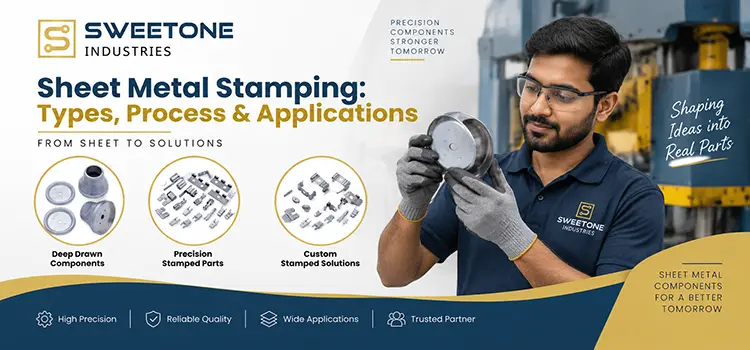
Sheet Metal Stamping: Types, Process & Applications
Sheet metal stamping is a commonly utilized manufacturing process for producing metal parts from flat sheets or coils. A stamping press uses a punch and die to force to cut, bend, draw or shape the material into the desired shape. It is a process used by manufacturers for parts that need fixed dimensions, a repeatable […]
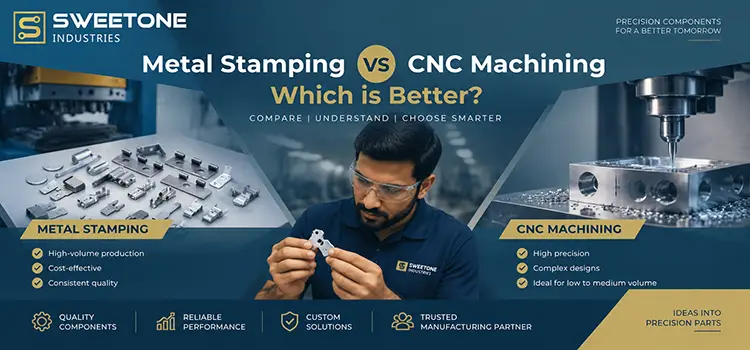
Metal Stamping vs CNC Machining: Which Is Better?
When a metal part needs to be made in large numbers, the production method can have a big effect on cost, speed, and quality. Two common options are metal stamping and CNC machining. Both can make accurate metal parts, but they work in very different ways. Metal stamping shapes sheet metal with a press and […]
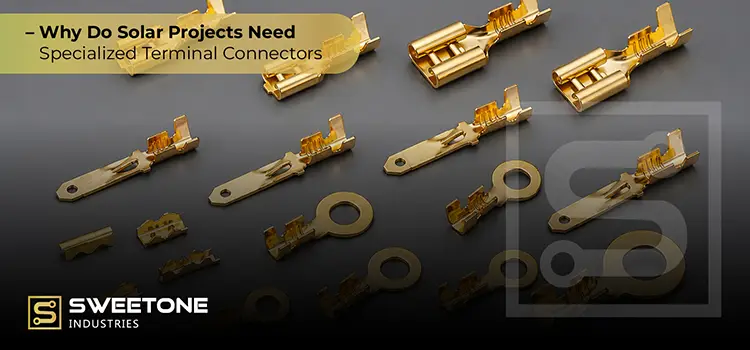
Why Do Solar Projects Need Specialized Terminal Connectors
Solar systems work outdoors for years, often under strong heat, rain, dust, humidity, and daily temperature changes. Every connection inside the system has to handle these conditions without becoming loose, corroded, or overheated. That is one reason a normal electrical connection may not always suit a solar installation. When installers connect modules, junction boxes, inverters, […]
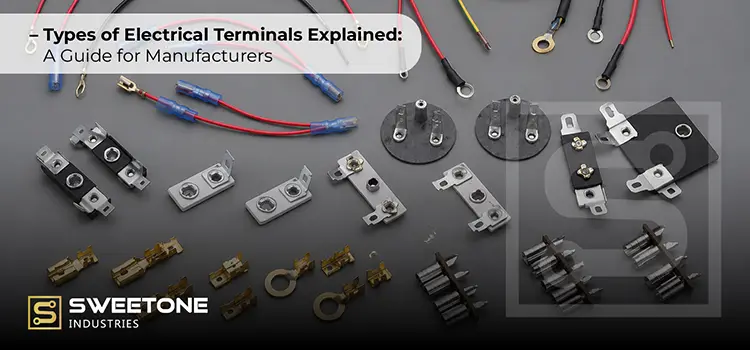
Types of Electrical Terminals Explained: A Guide for Manufacturers
Electrical terminals are used almost everywhere: inside machines, cars, control panels, appliances, electrical boxes and electronic products. Their job looks simple, but the wrong terminal can create loose wiring, heat, poor current flow or repeated connection problems. Manufacturers usually choose a terminal by looking at wire size, current load, fitting method, terminal shape, material and […]
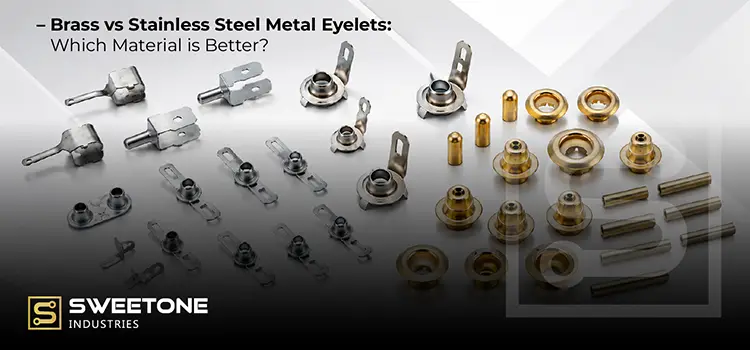
Brass vs Stainless Steel Metal Eyelets: Which Material Is Better?
When you buy eyelets in bulk, material is one of the first things you need to check. Two eyelets may have the same size and shape but behave very differently once they are fitted into a product. One might be easier to press and bend , another might be harder but last longer around water […]
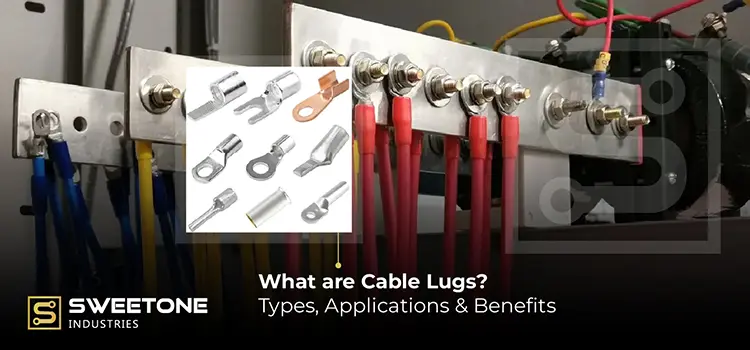
What Are Cable Lugs? Types, Applications & Benefits
A cable may carry electricity, but it cannot connect safely to a panel, battery, busbar, switch, or machine on its own. It needs a proper metal end that holds the conductor firmly and creates a clean contact point. That metal end is called a cable lug. In simple terms, a cable lug joins an electrical […]
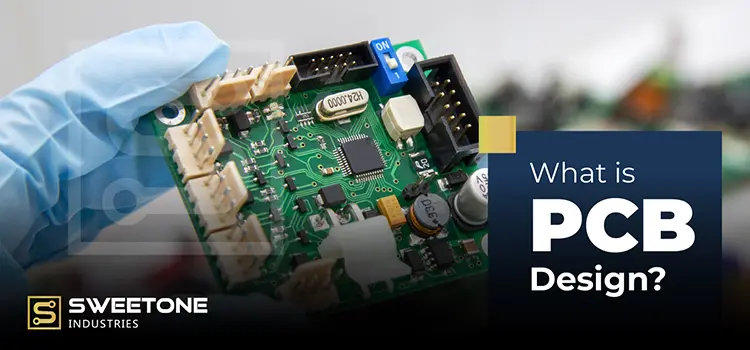
What is PCB Design?
Printed Circuit Board (PCB) design is the process of planning and creating the layout of electronic circuits on a board that connects different components in a controlled way. When people search what is PCB design, pcb kya hota hai, or pcb design meaning, they are basically trying to understand how electronic devices are built at […]
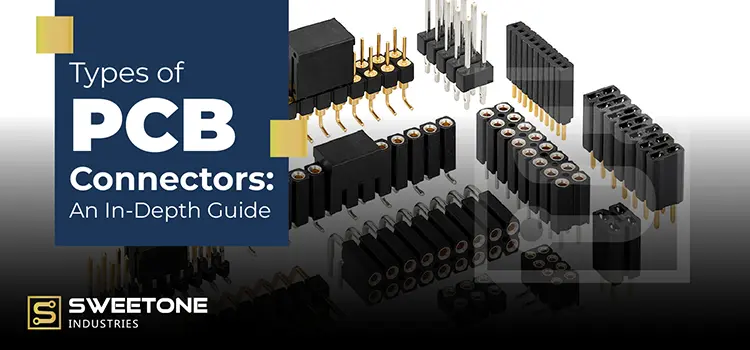
Types of PCB Connectors: An In-Depth Guide
PCB connectors sit quietly inside almost every electronic device, but they decide how stable and reliable a circuit actually is. These small components handle power flow, signal transfer, and board-to-board communication without permanent soldering. In real-world applications, pcb connectors make devices easier to assemble, repair, and upgrade. From home appliances to industrial control systems, the […]
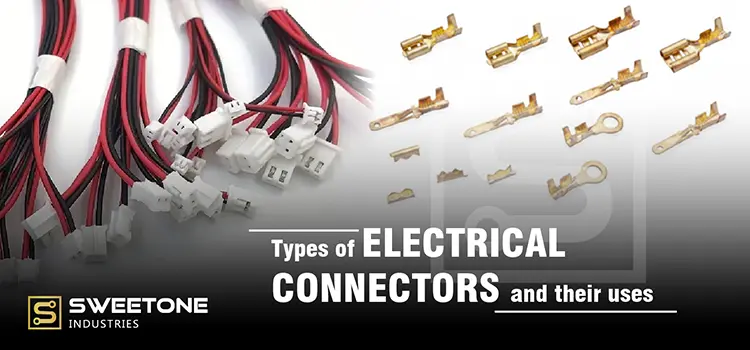
Types of Electrical Connectors and Their Uses
Electrical connectors are devices that join wires, cables, or electrical equipment to allow electricity to flow safely. They are used everywhere, from household wiring to industrial machines. Choosing the right connector ensures a secure connection, prevents sparks or short circuits, and makes maintenance easier. At Sweetone Industries, we provide durable and reliable electrical connectors for […]
- 1
- 2