
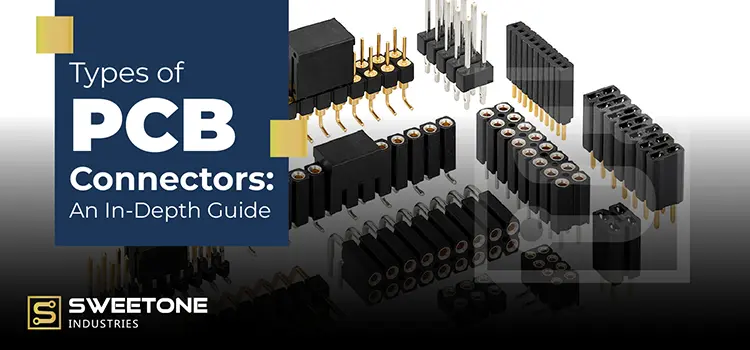
PCB connectors sit quietly inside almost every electronic device, but they decide how stable and reliable a circuit actually is. These small components handle power flow, signal transfer, and board-to-board communication without permanent soldering. In real-world applications, pcb connectors make devices easier to assemble, repair, and upgrade. From home appliances to industrial control systems, the right connector design directly impacts performance, safety, and lifespan.
Understanding PCB Connectors
PCB connectors are mechanical and electrical parts used to connect circuit boards or link a board with external wiring. These are also known as ‘circuit board connectors’, ‘PCB board connectors’, or ‘connector PCB components’ in engineering systems.
Key Points:
- Enable electrical connection between boards and external devices
- Reduce dependency on permanent solder joints
- Support modular circuit design
- Improve maintenance and replacement flexibility
In most electronics, PCB connector types are selected based on voltage, current load, and environmental conditions like heat or vibration.
Function of PCB Connectors
PCB connectors are not just linking parts; they control how efficiently a system communicates internally.
Main Functions:
- Transfer power and electrical signals safely
- Maintain stable pcb connections during movement
- Support multi-board systems in compact devices
- Reduce circuit failure caused by wiring stress
- Allow quick servicing without damaging the board
In industries like automation and automotive electronics, circuit board connector types are chosen for long-term durability and secure locking mechanisms.
Types of PCB Connector Mounting
Different pcb connector mounting styles are used based on design requirements and space availability.
- Through-Hole Mounting
- Inserted into drilled PCB holes
- Strong mechanical grip
- Used in heavy-load applications
- Surface Mount Technology (SMT)
- Mounted directly on PCB surface
- Compact design for modern electronics
- Common in smartphones and compact devices
- Edge Mounting
- Placed on the edge of PCB
- Used for direct system-to-board connection
- Common in computers and expansion cards
Each mounting style impacts how pcb connections perform under stress, vibration, and heat.
Categories of PCB Connectors
PCB connectors are grouped based on how they connect circuits and components.
Wire to Board Connector
- Connects external wires to PCB
- Used in appliances, LED systems, and control panels
- One of the most widely used pcb connector types
PCB to PCB Connector
- Links two circuit boards together
- Used in stacked or compact electronic systems
- Saves space and improves modular design
PCB Socket Connector
- Allows removable components like ICs
- Used where frequent replacement is required
- Improves maintenance efficiency
Edge Connectors
- Connect PCB edge to another device or board
- Common in computers and communication hardware
Custom Circuit Board Connectors
- Designed for specific engineering needs
- Used in industrial and high-performance systems
These circuit board connector types help engineers match design requirements with electrical performance.
Types of PCB Connectors in Real Applications
When analyzing types of pcb connectors in practical systems, selection depends on electrical load, space, and durability requirements.
Common Use Factors:
- Current carrying capacity
- Signal stability and resistance
- Mechanical locking strength
- Heat and vibration tolerance
For example, pcb to pcb connector systems are widely used in compact devices where space optimization is critical. On the other hand, wire to board connector systems are preferred where external wiring is involved.
Manufacturers like Sweetone Industries focus on connector pcb solutions that support industrial reliability and long service life.
Importance of PCB Connections in Electronics
Stable pcb connections ensure smooth operation of any electronic system. A weak connector on pcb can lead to signal loss, overheating, or complete device failure.
Why PCB Connectors Matter:
- Improve circuit reliability
- Reduce maintenance cost
- Support scalable product design
- Increase device lifespan
- Ensure safe power distribution
In high-performance electronics, even a small mismatch in pc board connectors can affect system efficiency.
PCB Connector Selection Factors
Choosing the right connectors pcb requires technical evaluation rather than guesswork.
Key Selection Criteria:
- Electrical load requirements
- Number of connection cycles
- Environmental conditions
- Board layout and spacing
- Signal speed and accuracy
These factors help determine the right circuit board connectors for stable performance in real-world conditions.
FAQs
1. What are pcb connectors used for?
They connect circuit boards or external wires to transfer power and signals safely.
2. What is a wire to board connector?
It connects external wiring directly to a PCB for power or signal input.
3. What is a pcb to pcb connector?
It links two circuit boards together in compact or stacked electronic systems.
4. Where are pcb socket connectors used?
They are used in devices where components need easy replacement or servicing.
5. Why are pcb connectors important?
They ensure stable pcb connections, reduce failures, and support flexible circuit design.