
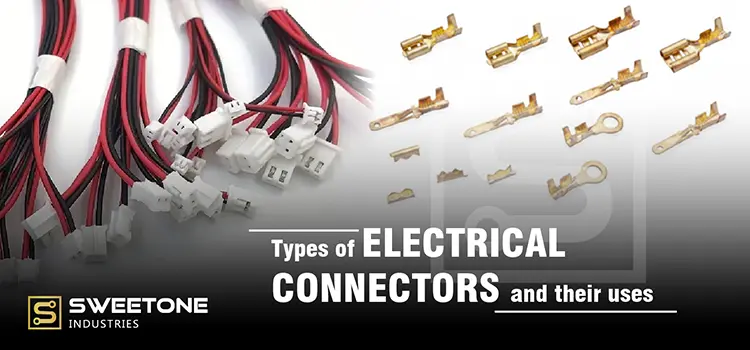
Electrical connectors are devices that join wires, cables, or electrical equipment to allow electricity to flow safely. They are used everywhere, from household wiring to industrial machines. Choosing the right connector ensures a secure connection, prevents sparks or short circuits, and makes maintenance easier. At Sweetone Industries, we provide durable and reliable electrical connectors for every application.
Electrical Connectors and Their Uses
There are different types of electrical connectors, each designed for a specific purpose. Using the wrong connector can cause poor performance, overheating, or equipment failure. Here’s a clear guide to the most common types and where they are used.
1. Wire-to-Wire Connectors
Wire-to-wire connectors, often called wire nuts, are used to join two or more wires together.
Why they are used:
- Connect wires in junction boxes, wall switches, and light fixtures.
- Cover exposed wire ends to prevent short circuits.
- Color-coded to match different wire gauges.
Key point: Wire-to-wire connectors are simple, safe, and widely used in homes and offices. They do not require tools other than pliers for tightening.
2. Terminal Connectors
Terminal connectors attach a wire to a device, such as a switch, circuit board, or motor.
Common types:
- Ring terminals
- Spade terminals
- Fork terminals
Why they matter:
- Provide strong mechanical and electrical connection.
- Easy to disconnect for maintenance or repairs.
- Common in automotive wiring, industrial machines, and appliances.
Terminal connectors make wiring more organized and reduce the risk of loose connections.
3. Plug and Socket Connectors
Plug and socket connectors allow wires to be connected and disconnected quickly.
Examples: USB connectors, audio jacks, and standard power plugs.
Benefits:
- Ideal for devices that need to be moved or disconnected often.
- Provide a stable electrical connection without soldering.
- Common in electronics, computers, and machinery.
Plug and socket connectors make handling cables more convenient and reduce wear on wires.
4. Coaxial and RF Connectors
Coaxial connectors are designed for carrying signals, not power.
Types: BNC, F-type, SMA connectors.
Applications:
- Television cables and satellite dishes.
- Internet and networking cables.
- Radio and communication equipment.
These connectors keep signals strong and prevent interference from surrounding electrical sources.
5. Cable Connectors
Cable connectors join an entire cable to a device or to another cable.
Examples: RJ45 connectors for network cables, XLR connectors for audio, and IEC connectors for power.
Why they are used:
- Connect multiple wires inside a cable securely.
- Reduce signal loss or voltage drop.
- Common in networking, audio systems, and power supply connections.
Using proper cable connectors improves safety and ensures consistent electrical performance.
6. Specialized Electrical Connectors
Some applications require special connectors that resist harsh conditions.
Features:
- Waterproof or dustproof.
- Heat, vibration, and corrosion resistant.
- Used in cars, boats, factories, and outdoor installations.
These connectors protect the wiring and devices, ensuring long-term reliability.
Choosing the Right Connector
To select the correct electrical connector, consider:
- Wire type and size
- Electrical load and voltage
- Environmental conditions (moisture, temperature, vibration)
How often the connection will be changed or disconnected
Using high-quality connectors from Sweetone Industries guarantees safety, strong connections, and longer equipment life.
FAQs
1. What is an electrical connector?
A device used to join wires, cables, or devices so electricity flows safely.
2. How many types of connectors are there?
Wire connectors, terminal connectors, plug and socket connectors, coaxial connectors, cable connectors, and specialized connectors for tough environments.
3. Can connectors be reused?
Some plug and socket connectors can be reused. Crimped wire connectors are usually single-use.
4. What is the difference between a wire and a cable connector?
Wire connectors join individual wires. Cable connectors join entire cables that contain multiple wires.
5. How do I choose the right connector?
Check the wire size, current load, environment, and frequency of use. Use trusted brands like Sweetone Industries for guidance.