
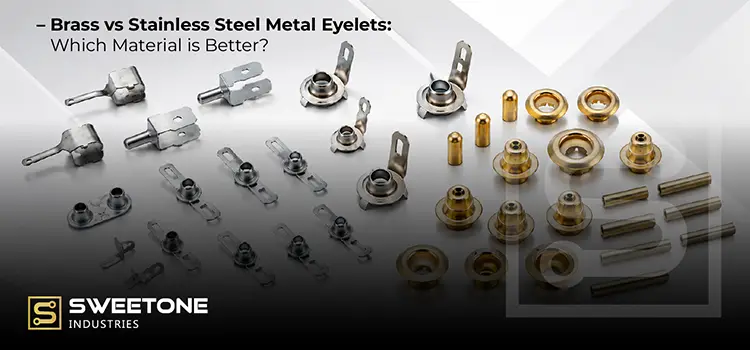
When you buy eyelets in bulk, material is one of the first things you need to check. Two eyelets may have the same size and shape but behave very differently once they are fitted into a product. One might be easier to press and bend , another might be harder but last longer around water and moisture .
This is where the comparison of Brass vs Stainless Steel Metal Eyelets: Which Is Better? becomes helpful. Brass and stainless steel are both popular, but for different reasons: Brass eyelets are easy to make and are used in a variety of electrical parts. Stainless steel eyelets are harder and are often chosen for jobs where rust, moisture and wear are more of a concern.
Sweetone Industries offers metal eyelets for different industrial applications including those requiring specific size, material, thickness and finish to conform to product drawing.
Brass vs Stainless Steel Metal Eyelets: Which Material Is Better for Strength, Electrical Use and Long Life?
There is no need to make this choice complicated. Start by looking at where the eyelet is going.
If an eyelet is going into an electrical part, brass may be the better choice because it conducts electricity well. It is also easier to press, flare, and shape.
If the eyelet will stay outdoors or regularly come in contact with water and moisture, stainless steel may suit the job better. It is harder than brass, and is not affected by rust and ordinary wear.
So, the best material is not simply the strongest or the cheapest one. It is the material that works properly in the product where you plan to use it.
What Are Brass Eyelets?
Brass eyelets are made mainly from copper and zinc. You have probably seen brass parts in electrical fittings, switches, connectors, bags, shoes, garments, and decorative products.
One reason manufacturers use brass is that it is easy to work with. It can be drawn into a small eyelet and then rolled, pressed, or flared during fitting.
Brass also has a clean natural look. When a different surface is required, manufacturers can use suitable plating or finishing.
Brass eyelets are often used for:
- Electrical switches and fittings
- PCB parts
- Electronic equipment
- Automotive electrical parts
- Bags and garments
- Footwear
- Packaging
- Decorative products
If you are searching for an Eyelets Manufacturer in India, ask about the brass grade as well as the eyelet dimensions. Basically, the eyelet fit is determined by the inner diameter, outer diameter, length, head size and wall thickness.
Why Do Manufacturers Use Brass Eyelets in Electrical Parts?
Electrical conductivity is a big reason.
Brass conducts electricity better than stainless steel. That makes brass eyelets useful in electrical parts where the eyelet may sit close to a contact, wire, terminal, or PCB.
This is especially relevant in Electronic Components & Assemblies. Small parts in an electrical assembly need the right size and material. Even though an eyelet costs very little compared with the complete product, a badly chosen part can cause trouble during fitting.
Brass is also easier to form. If the end of an eyelet needs to be rolled or flared after insertion, brass can be easier to handle than a harder stainless steel part.
When Brass Can Be a Good Choice
You can look at brass when you need:
- Better electrical conductivity
- Easy flaring or crimping
- A smooth surface
- Plated eyelets
- Small precision eyelets
- A decorative brass finish
Brass is also found in products that use Terminals & Connectors, particularly in electrical and electronic work.
What Makes Stainless Steel Eyelets Different?
Stainless steel is harder than brass. It is widely known for handling moisture and rust better, which is why you see it in products used in kitchens, factories, vehicles, medical equipment, and outdoor areas.
For an eyelet, this can be useful when the finished product will spend time in a wet or humid place.
Think about an outdoor product that gets wet regularly. A softer material with the wrong finish may not be suitable for that job. Stainless steel gives the manufacturer another option when corrosion resistance is high on the list.
It can also take more wear than brass in many uses.
Where Stainless Steel Eyelets Are Commonly Used
Stainless steel eyelets can be used for:
- Outdoor equipment
- Machine parts
- Automotive products
- Kitchen products
- Industrial fittings
- Products kept in humid places
- Parts that face repeated wear
There is one thing to remember: because stainless steel is harder, it can take more force to form or flare. The tooling and eyelet thickness therefore need to be right.
Is Brass or Stainless Steel Better for Metal Eyelets?
The answer changes with the job.
For an electrical fitting, brass often makes more sense. It conducts electricity well and is easier to form.
If the product is left outside, stainless steel might be a better choice because moisture and rust become more of an issue.
For a decorative product, brass may be chosen for its natural colour and finish.
For a part that faces regular rubbing or harder use, stainless steel may last better.
This is why you should not order metal eyelets by size alone. Ask what the eyelet will touch, where the product will be used, and how the eyelet will be fitted.
What Does Steel Structure Design Have to Do With Material Choice?
The term steel structure design normally relates to much larger steel parts, but it gives us a simple example of how engineers choose materials.
A designer does not pick steel only because it is strong. The designer checks load, weather, moisture, expected life, and where the structure will stand.
The same basic thinking helps when choosing a small eyelet.
You may not be dealing with a building or a large steel frame, but you still need to ask practical questions. Will the eyelet get wet? Will it carry current? Will it be pressed during assembly? Will people handle the product every day?
Those answers tell you more than simply asking which metal is stronger.
Check the Eyelet Size Along With the Material
Material alone cannot make an eyelet work properly.
Eyelets are often fitted into Sheet Metal & Precision Components, electrical parts, plastic pieces, fabrics, and other products. The eyelet has to match the hole and the fitting method.
Before ordering, check:
- Inside diameter
- Outside diameter
- Overall length
- Head diameter
- Wall thickness
- Hole size
- Material grade
- Plating or finish
- Quantity required
- Fitting method
For a custom job, a drawing or physical sample can make things much easier. Instead of guessing important details, it provides the manufacturer with exact measurements.
How Do You Find the Best Material for Your Eyelets?
Start with the product, not the metal.
If you need conductivity and easy forming, brass eyelets are worth considering. They are commonly used in electrical parts and can also take different finishes.
If the eyelet will face moisture, outdoor use, or regular wear, stainless steel may be the best material.
For some jobs, price will also affect the decision. But buying the cheapest eyelet is not useful if it creates fitting problems or needs to be replaced sooner.
Sweetone Industries works with different eyelet requirements for electrical and industrial products. When asking for a quote, share the material, dimensions, drawing, quantity, finish, and where the part will be used. These details make it easier to produce an eyelet that actually fits the job.
FAQs
1. Do brass eyelets have more strength than stainless steel eyelets?
Stainless steel is usually stronger and harder. Fitting is easier with brass which is softer.
2. Which eyelet material is good for electrical products?
Brass is commonly used because it has better electrical conductivity than stainless steel.
3. Are stainless steel eyelets good for outdoor products?
Yes. Stainless steel is a common choice where eyelets may face rain, moisture, or humid air.
4. What is the best material for metal eyelets?
The best material depends on the product. Brass works well for conductivity and forming, while stainless steel suits many wet and hard-wearing uses.
5. Can brass eyelets be made in different sizes?
Yes. Brass eyelets can be produced in different diameters, lengths, wall thicknesses, head sizes, and finishes.