
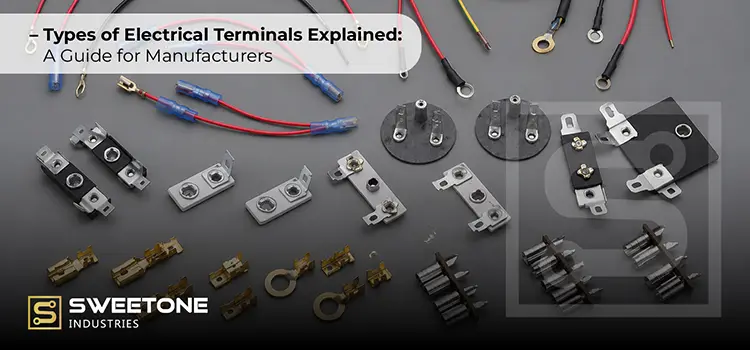
Electrical terminals are used almost everywhere: inside machines, cars, control panels, appliances, electrical boxes and electronic products. Their job looks simple, but the wrong terminal can create loose wiring, heat, poor current flow or repeated connection problems.
Manufacturers usually choose a terminal by looking at wire size, current load, fitting method, terminal shape, material and the place where the product will be used. Sweetone Industries manufactures electrical terminals, connectors, eyelets and small precision metal parts for different industrial uses.
If you are selecting parts for a new product or replacing an existing connection, understanding the main electrical terminal types can make the choice much easier.
Types of Electrical Terminals Explained: A Guide for Manufacturers Looking for the Right Wire Connection
There are many types of terminals, and each one is made for a certain type of connection. Some terminals fit around screws. Some slide onto blades. Some join one wire to another, while others are used inside terminal blocks or wiring harnesses.
A good wire terminal should hold the wire firmly and make proper contact with the mating part. It should also suit the current level, wire thickness and working conditions.
This is why manufacturers should not select terminals only by shape or price.
What Are Electrical Terminals?
Electrical terminals are metal parts fitted to the end of a wire or cable. They help connect the wire to another wire, a screw, stud, switch, terminal block, connector or electrical device.
In many products, the wire is fixed to the terminal by crimping. The front part of the terminal is then connected to another component.
Brass, copper and phosphor bronze are commonly used for making terminals. Depending on the application, the terminal may also have tin, nickel or another surface finish.
Companies dealing with Electronic Components & Assemblies often use different terminal shapes in the same product.
Why Does Terminal Selection Matter?
A terminal needs to fit correctly. If it is too loose, the connection may move. If the crimp area does not match the wire size, the wire may pull out or get damaged.
Poor terminal selection may lead to:
- Loose electrical contact
- Heat near the connection
- Wire damage
- Higher resistance
- Corrosion
- Poor fitting
- Product failure
Choosing the correct terminal at the start can save time during assembly and reduce fitting problems later.
Common Electrical Terminal Types Used in Manufacturing
Different industries use different electrical terminal types. Some of the most common options are explained below.
1. Ring Terminals
Ring terminals have a round hole at one end. The hole fits around a screw or stud.
Once the screw is tightened, the terminal stays in place. This is why ring terminals are often used where the connection should not come off easily.
You will commonly find them in battery wiring, control panels, automotive systems, earthing points and industrial machines.
2. Fork or Spade Terminals
Fork terminals have an open U-shaped end. They can slide under a screw without removing the screw completely.
This makes them useful where wires may need to be removed during repair or servicing.
Among the different types of terminals, fork terminals are often used in switches, relays, control panels and electrical equipment.
3. Pin Terminals
Pin terminals have a thin metal end that fits into a terminal block or connector.
They’re good for stranded wire, as the crimped portion holds the strands together. This makes it easier to insert the wire and helps prevent fraying of loose strands around the connection point.
4. Blade Terminals
Blade terminals have a flat metal end that slides into a matching connector.
They are widely used in cars, appliances, switches, control systems and wiring harnesses.
Blade terminals are useful where a connection needs to be fitted quickly and removed when required.
5. Butt Connectors
Butt connectors are used to join two wires.
One wire enters from one side and another wire enters from the opposite side. Both are crimped in place.
These connectors are common in vehicle wiring, machine wiring, cable repairs and electrical installation work.
If you are comparing electrical wire connectors types, butt connectors are among the easiest options to understand because their main job is simply joining two wires end to end.
6. Bullet Terminals
Bullet terminals use a round male and female connection.
The male part fits into the female part. This type of connection can be disconnected and connected again without cutting the wire.
They are often used in motorcycles, cars, lights and low-voltage electrical systems.
The male and female parts should match properly. A poor fit may result in weak electrical contact.
7. Quick Disconnect Terminals
Quick disconnect terminals are made for fast fitting and removal.
They often use a male tab and a female receptacle. Workers can connect the two parts quickly during assembly.
These terminals are commonly found in:
- Home appliances
- Automotive wiring
- HVAC units
- Lighting products
- Electrical machines
- Control boxes
They are useful on production lines where many similar connections need to be made.
How to Choose the Right Wire Terminal
A wire terminal should match the job it needs to do.
- Before selecting one, check:
- Wire gauge
- Current rating
- Terminal size
- Metal type
- Crimp size
- Stud or blade size
- Working temperature
- Moisture exposure
- Vibration
- Surface plating
For example, a terminal used inside a small household appliance may not need the same strength or surface finish as one used in an automotive part.
Sweetone Industries manufactures Terminals & Connectors for different electrical and industrial uses. Buyers can share drawings, samples, sizes and material requirements when they need a particular terminal design.
Electrical Wire Connectors Types and Their Materials
Different electrical wire connectors types are made from different metals.
Brass is widely used because it gives a good balance of conductivity, strength and forming ability. Copper is selected where higher electrical conductivity is needed. Phosphor bronze is often used where spring action or repeated contact matters.
Surface finish also affects performance. Tin plating, for example, is commonly used on electrical parts where soldering or protection from surface oxidation is needed.
The connector shape and its material should always be checked together.
Why Size Matters in Electrical Terminals
A difference of even a small amount can create a fitting problem.
If the crimp section is too wide, the wire may stay loose. If it is too narrow, the wire may get crushed. A wrong hole size can stop a ring terminal from fitting over the stud. A wrong blade width may prevent proper connection with the female part.
This becomes more important during bulk production because the same part is used again and again.
Sweetone Industries also supplies Sheet Metal & Precision Components for industrial needs. Companies that buy terminals often require other stamped or formed metal parts for the same assembly.
Businesses searching for an Eyelets Manufacturer in India may also need terminals, connectors, rivets and related components for electrical, automotive or electronic products.
Which Terminal Should a Manufacturer Choose?
There is no single terminal that fits every application.
Ring terminals are useful when the wire needs to stay fixed to a stud. Fork terminals are better where the connection may need regular removal. Pin terminals work well with terminal blocks. Blade and quick disconnect terminals are useful when fast assembly matters.
The right choice depends on wire size, current, method of fitting, working conditions and how often the connection will be taken apart.
Checking these details prior to production can avoid common problems such as loose fitting, wire pull out and mismatched parts.
Frequently asked questions
1. What are the main kinds of electrical terminals?
Common types include ring , fork , blade , pin , bullet , butt and quick disconnect terminals .
2. What is a wire terminal used for?
A wire terminal connects a wire to another wire, connector, screw, stud or electrical part.
3. Which terminal is best for screw connections?
Ring and fork terminals are commonly used for screw and stud connections.
4. Which metals are used for electrical terminals?
Brass, copper and phosphor bronze are commonly used for manufacturing electrical terminals.
5. Can electrical terminals be made according to drawings?
Yes. Manufacturers can make terminals according to required size, material, shape, plating and application.